TYPE:
Engineering Analysis
CONTEXT:
Academic
FOCUS:
CFD · Heat Transfer · Thermal Management
YEAR:
2025
Battery Cooling Plate
about.
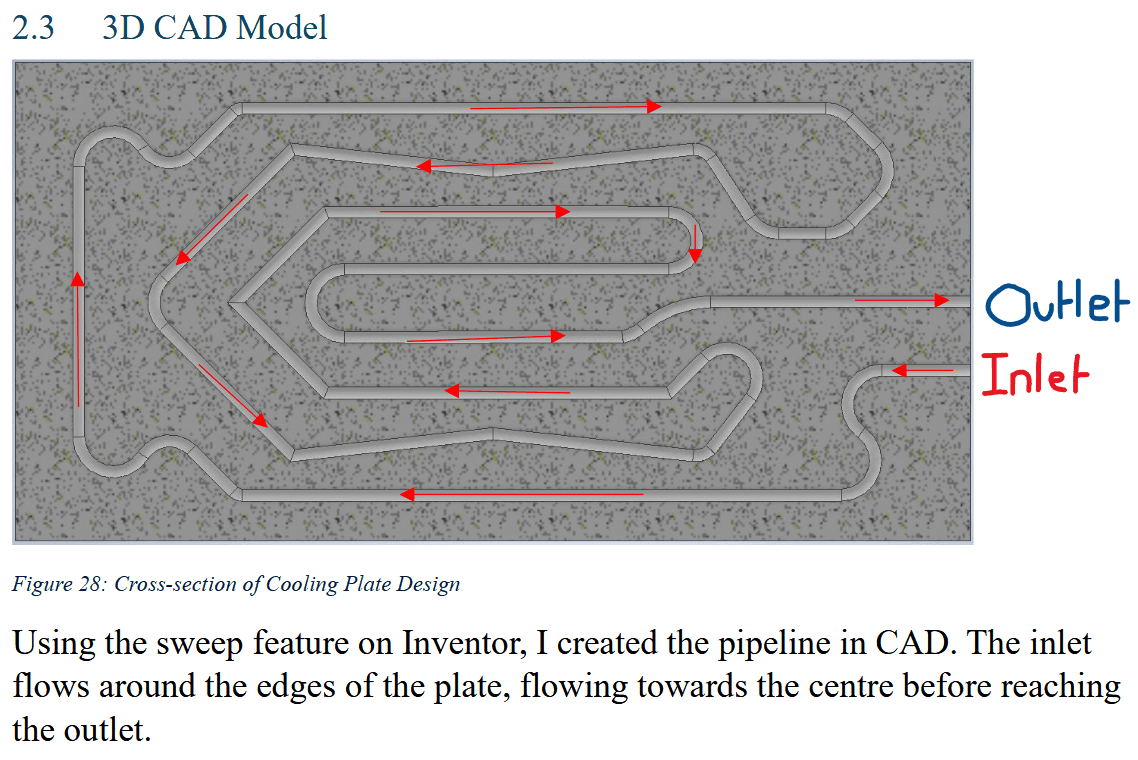
This project explores the thermal management of a battery module using a liquid-cooled cold plate, with CFD used as a primary design and optimisation tool.
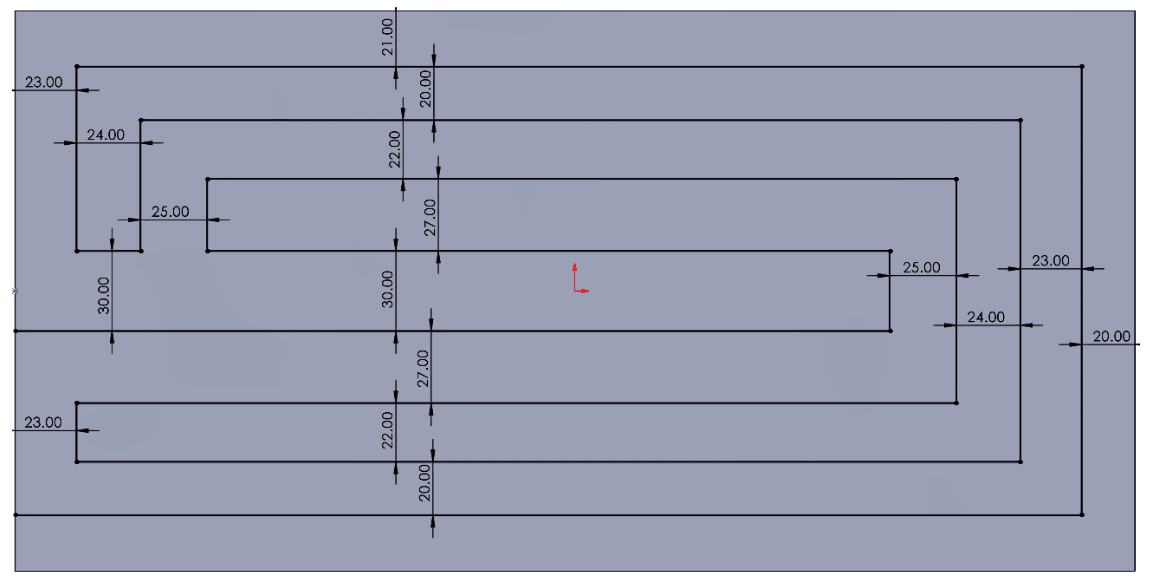
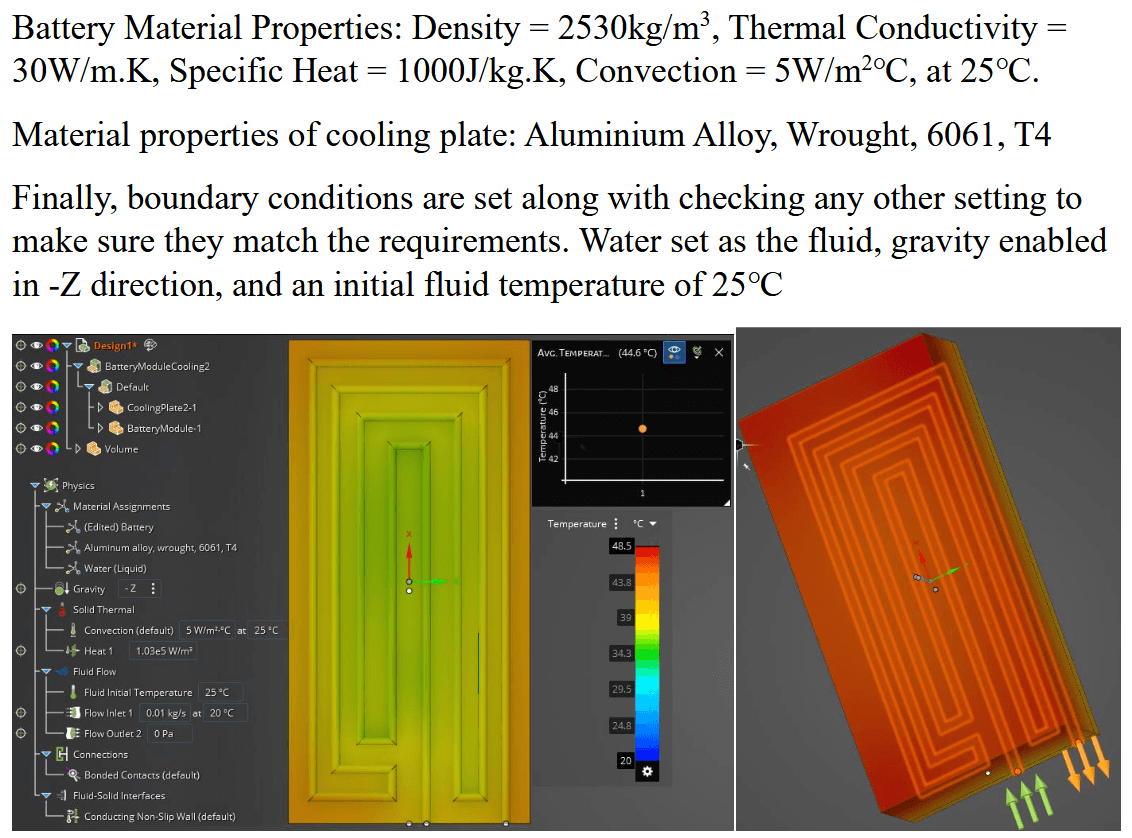
A parametric pipeline geometry was developed in CAD and evaluated in ANSYS Discovery to study conjugate heat transfer between the battery, aluminium cooling plate, and water coolant. Rather than validating a fixed design, the workflow focused on iterating geometry to understand how channel layout and pipe radius influence temperature uniformity and overall thermal performance.
challenge.
Effective battery cooling requires balancing competing constraints: increasing turbulence improves heat transfer but directly increases pressure drop and pumping demand.
The challenge was to design a cooling plate geometry that reduced peak and average battery temperatures while remaining hydraulically efficient, manufacturable, and numerically stable in CFD. This required careful selection of boundary conditions, simplified yet representative channel layouts, and controlled parametric variation to isolate the impact of geometric changes without introducing simulation artefacts.
results.
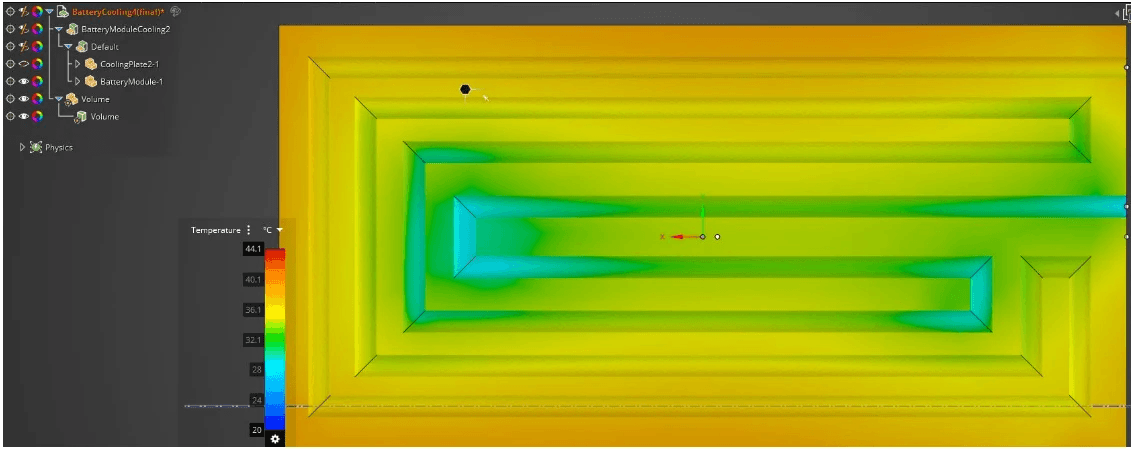
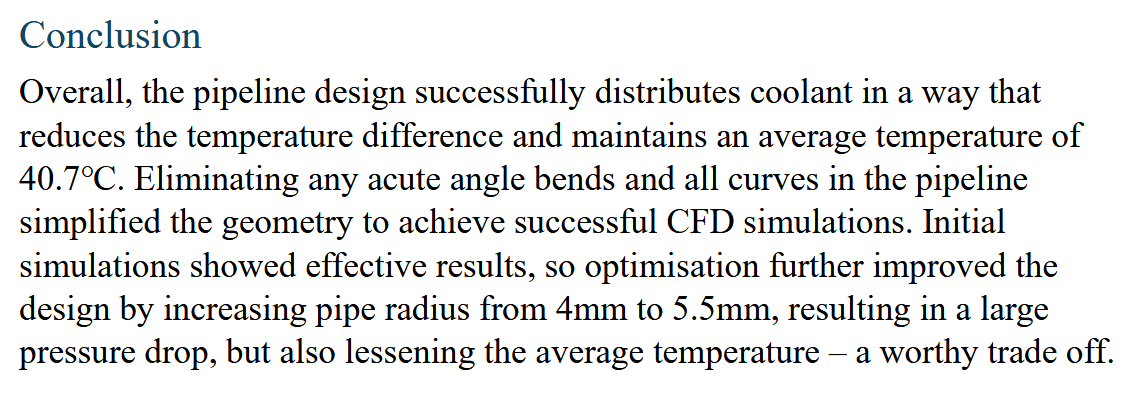
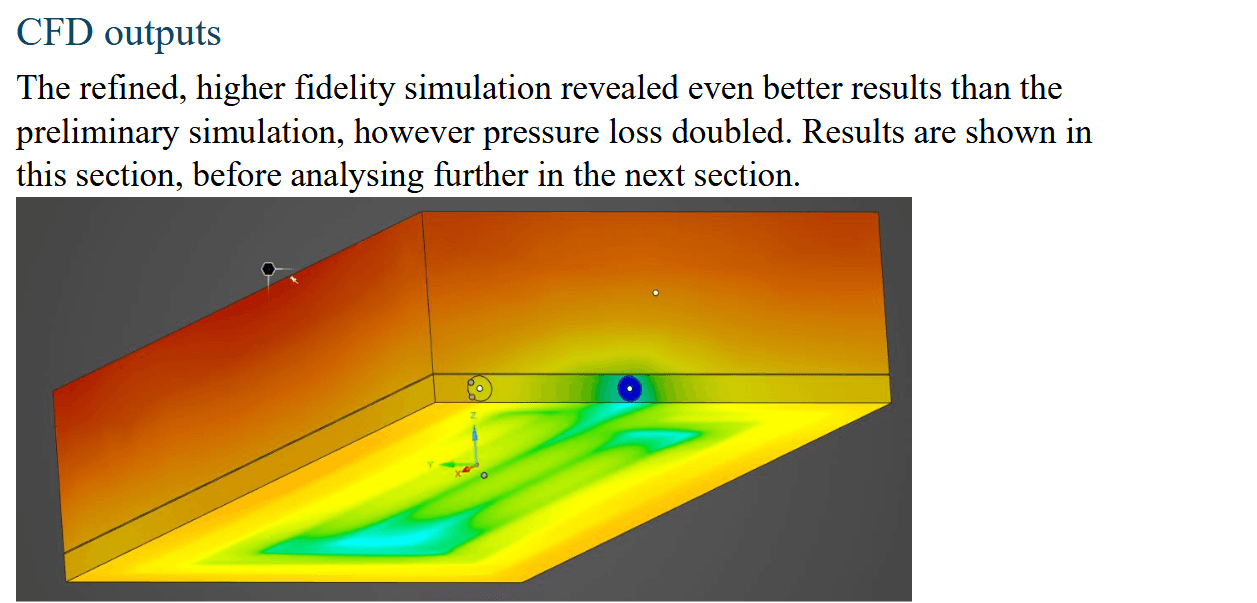
The optimised cooling plate achieved a reduction in average battery temperature from ~43.5 °C to 40.7 °C, with peak temperature reduced to 44.1 °C under refined simulation conditions.
This improvement came with an increase in pressure drop from 123 Pa to 264 Pa, illustrating a clear and quantified trade-off between thermal performance and hydraulic efficiency.
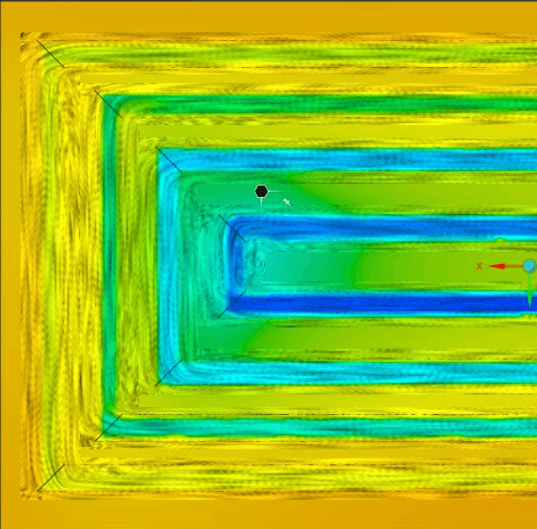
Flow visualisation showed increased turbulence around bends and parallel channels, improving convective heat transfer while maintaining relatively uniform coolant velocity across the plate. Overall, the final design demonstrated effective temperature control with a pressure penalty considered acceptable for the performance gain.