TYPE:
Engineering Analysis
CONTEXT:
Academic
FOCUS:
Finite Element Analysis · Fatigue · Modal Analysis
YEAR:
2025
TMJ Implant (FEA)
about.
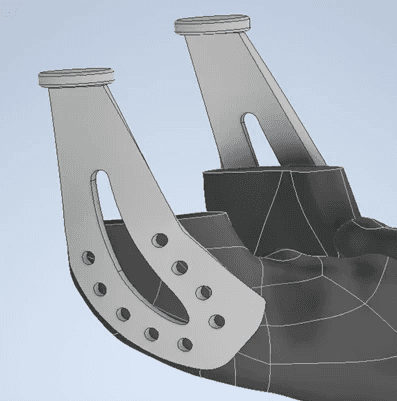
This project focuses on the finite element–driven design and optimisation of a patient-specific temporomandibular joint (TMJ) condylar implant.
The objective was to validate structural integrity, fatigue life, and vibrational safety under realistic physiological loading, while reducing implant mass through geometry iteration.
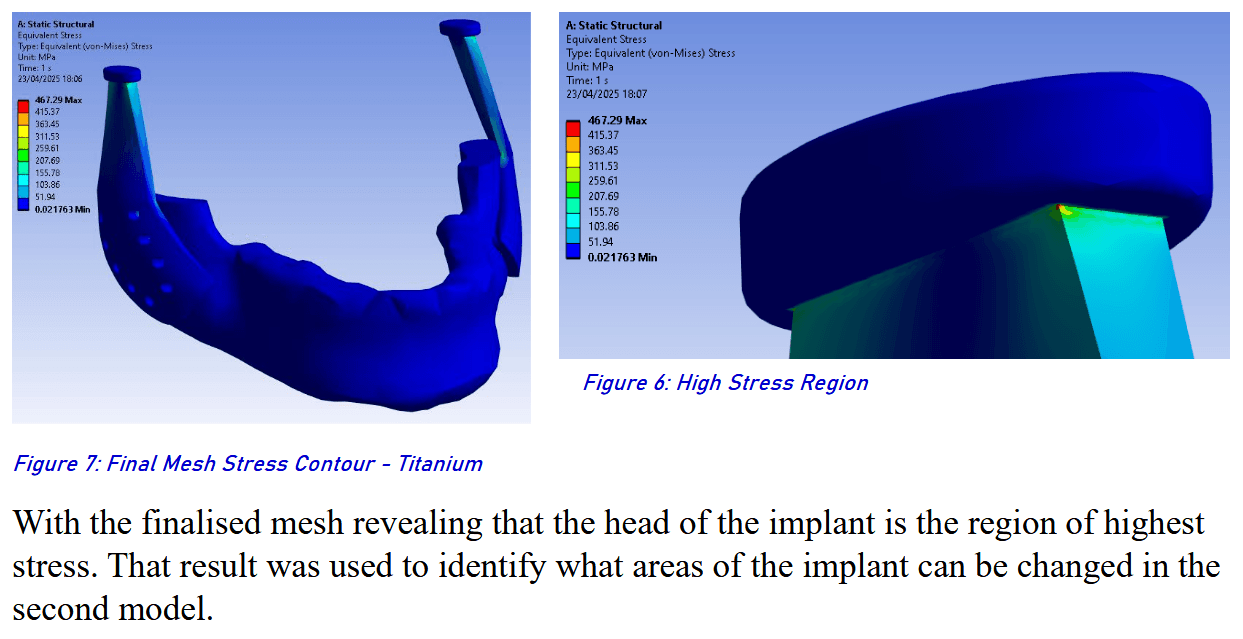
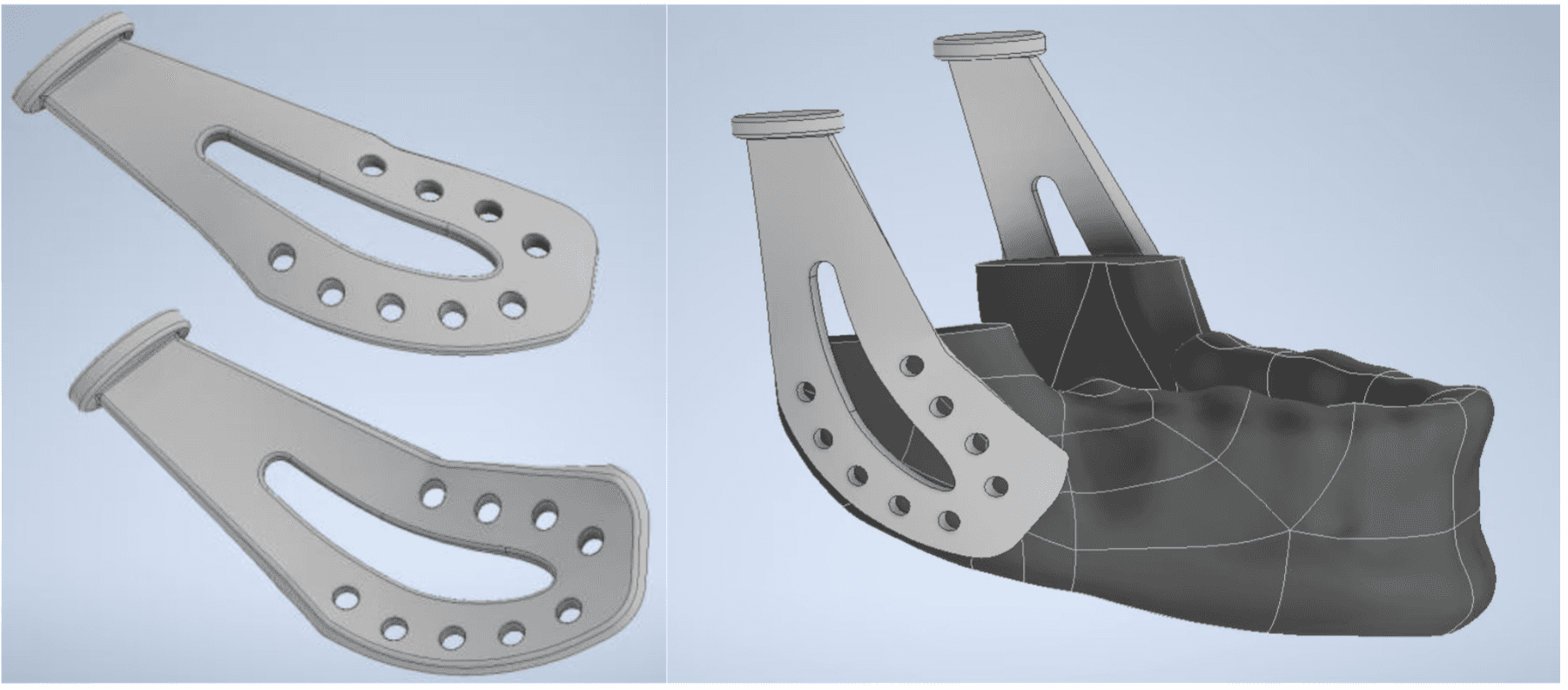
Using ANSYS Mechanical, two implant geometries were evaluated across two biocompatible materials (Ti-6Al-4V and SS-316L), with simulations covering static stress, fatigue life, and modal behaviour. The work demonstrates how simulation can be used to guide design decisions before physical prototyping.
challenge.
The primary challenge was ensuring long-term structural reliability of a lightweight TMJ implant under repeated biting loads, while avoiding resonance during daily use.
The design was required to withstand 1,000,000 loading cycles (≈10 years), maintain a fundamental frequency above 50 Hz, and remain manufacturable in biocompatible metals.
Additional constraints included mesh convergence limits imposed by available computational resources, uncertainty in fatigue data, and simplifying assumptions around bone–implant contact conditions.
results.
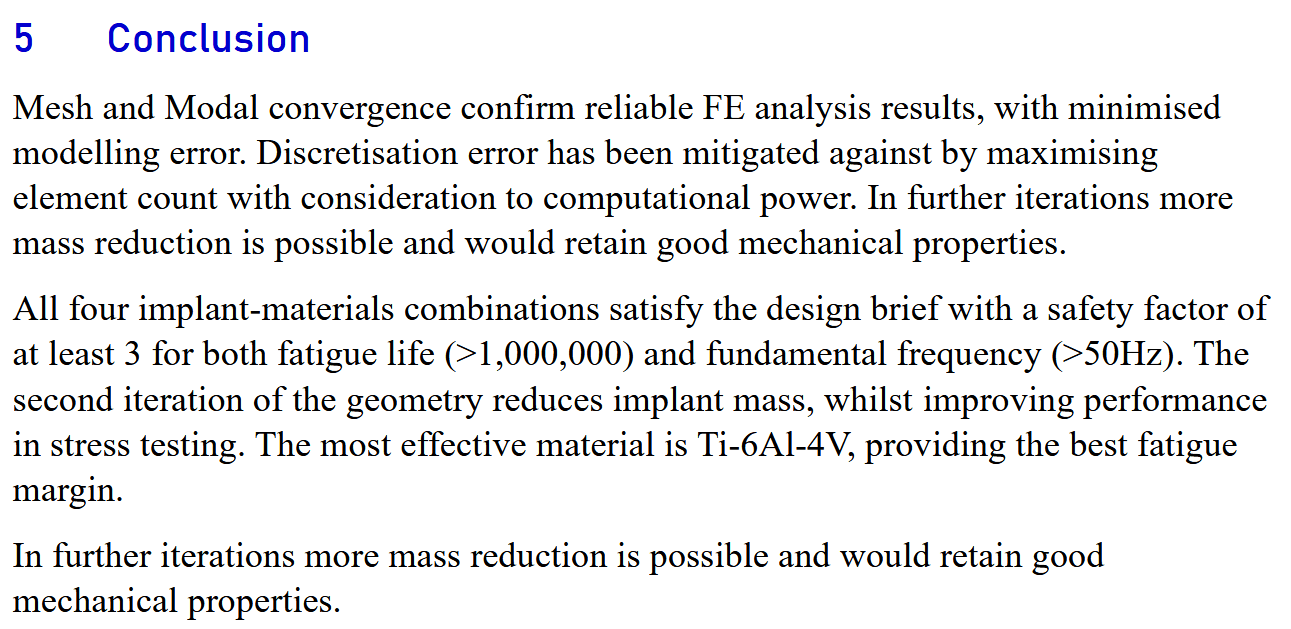
The second implant iteration achieved a 10–15% mass reduction while simultaneously reducing peak equivalent stress compared to the initial design.
Fatigue analysis showed titanium implants exceeding the target life by four orders of magnitude, with damage below 0.01% after one million cycles. Stainless steel variants also met the life criteria with acceptable margins.
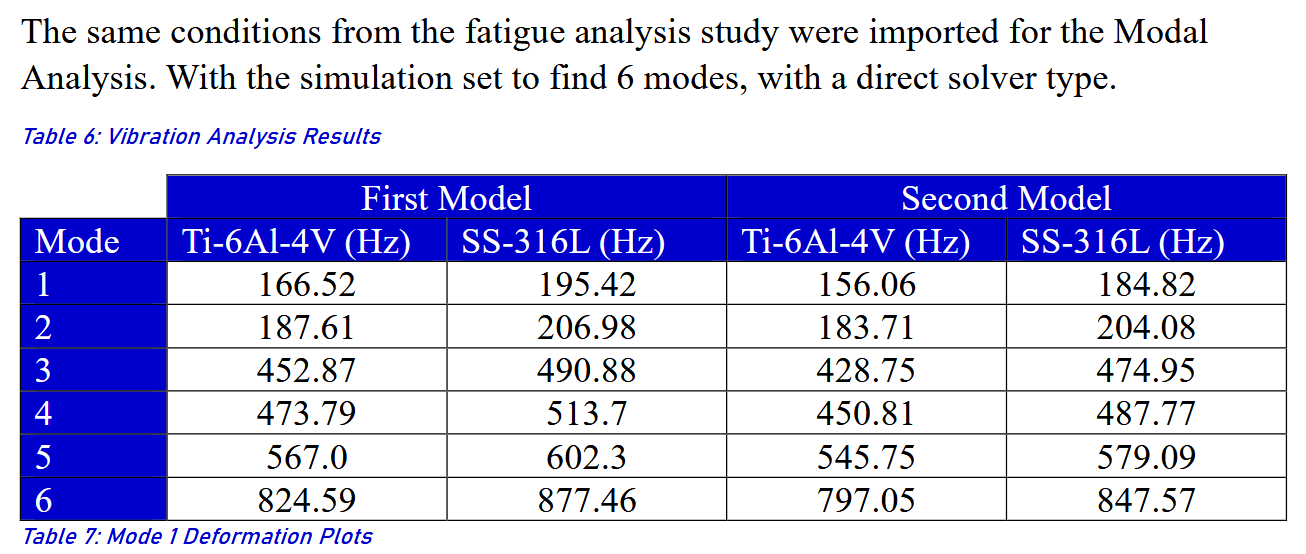
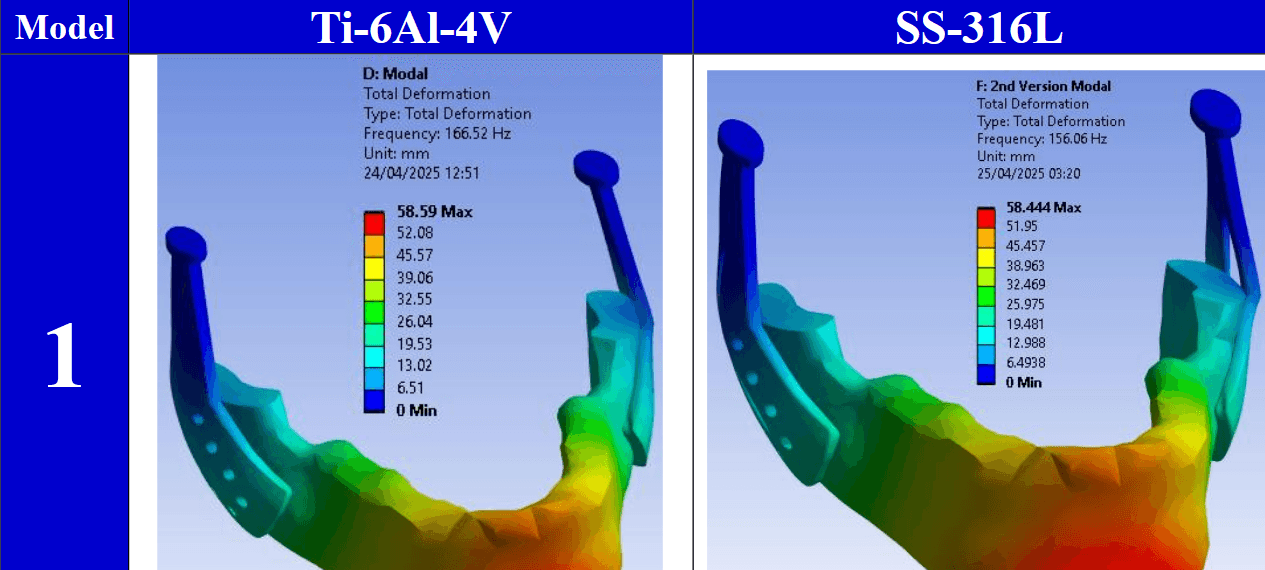
Modal analysis confirmed all configurations had fundamental frequencies well above 150 Hz, comfortably exceeding the 50 Hz safety threshold and eliminating resonance concerns during normal use.
Overall, the project demonstrates how finite element analysis can be used not only for validation, but as a design tool to drive geometry optimisation and material selection.
Methodology
Finite element simulations were conducted in ANSYS Workbench and Mechanical.
Realistic boundary conditions were applied using a 500 N peak biting force per side, with implants fixed to the mandible via bolted constraints. Mesh refinement studies were performed to balance accuracy and computational feasibility, including localised mesh control around high-stress regions.
Fatigue analysis used imported S-N curves, with Gerber mean-stress correction applied for Ti-6Al-4V under zero-based loading. Modal analysis evaluated the first six natural frequencies to assess resonance risk.